About the Journal
MeTis is an International Open Access and peer-reviewed journal of Pedagogy and Education. The purpose of MeTis is to allow suggestions, contaminations, hybridations among Pedagogy and all human sciences. In this way, we intend to enlarge the scapes of reflection and problematization, knowledge and paxis, choise and guidance.
MeTis is a scientific journal based on a double blind reference, directed by Giuseppe Annacontini. It aims to deepen the issues/problems of educational emergencies throughout the life course and the multiple contexts in which the subject is born, grows and is educated.
MeTis is the occasion for a critical and dialectical meeting between interpretations and theoretical-practical proposals that are usually different and distant. The aim is to use the distance as resource for comparison, for research and common growth. In this sense, the journal's organizational choices are all aimed at making easier the widespread difficulties in disseminating research and thought that links scholars and researchers in the educational sector. In this sense, the magazine does not ask for any APCs or publication charges.
MeTis is indexed by: Google Scholar; CrossRef; erih+; OpenAIRE, EZB; ZDB; Wikidata; Sudoc; Openalex; ACNP; WorldCat; Ulrich's WEB Global serials directory; Pleiadi; JURN search-engine. Awaiting confirmation from: DOAJ (Directory of Open Access Journals), whose definition of open access journal (Creative Commons) it complies with; Academic Journals Database.
MeTis uses CLOCKSS, LOCKSS, and PKP PN services for the digital archiving of contributions.
MeTis publishes, in addition to the regular issues of the magazine, the "Quaderni" - monographs on specific issues identified by the Scientific Committee and with double blind refereed - and the "Speciali" - collections of contributions from national and international scientific conferences (with Scientific Committee) of pedagogical importance, selected by the Scientific Committee -.
MeTis publishes, in addition to scientific articles pertaining to the Call for Papers, articles in the Miscellaneous (different topic), Talks (by invitation only) and Interviews sections.
MeTis publishes contributions from unstructured scholars (those who do not have access to the VQR, Italy's Research Quality Assessment) only if they meet three criteria: They must be single-signed (authored by one individual); they must be relevant to the specific Call for Papers; they must not exceed 20 percent of the total contributions from structured colleagues, in accordance with ANVUR (the National Agency for the Evaluation of Universities and Research Institutes) guidelines. Even if these contributions receive positive reviews, MeTis cannot guarantee that all will be published due to these constraints.
“La metis è diversa dal grande logos, la ragione alta e luminosa, appannaggio e prerogativa degli uomini. È un’intelligenza “bassa”, che a differenza del logos non è astratta, non classifica, non costruisce categorie. È concreta e si rivolge al caso singolo, al problema specifico. È frutto dell’esperienza e della riflessione, di conoscenze acquisite con la pratica. E non raggiunge mai gli obiettivi in modo lineare: sostanzialmente, essa consiste nella capacità di usare trucchi, stratagemmi, di inventare insidie agendo per vie traverse, oblique, raggiungendo gli obiettivi per strade tortuose” (Cantarella).
"Metìccio (ant. mestìccio, mestizzo o mestizo) s. m. (f. -a) e agg. [lat. tardomixtīcius, der. di mixtus, part. pass. di miscēre «mescolare» (propr. «misto di colore bianco e nero»), influenzato successivamente dal fr. métis; le varianti ant. mestizo o mestizzo sono dallo spagn. mestizo, che ha lo stesso etimo] (pl. f. -ce)" (Treccani).
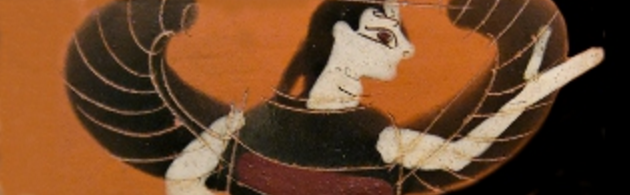
“Metide (Μῆτις, -ιδος; lat. Mētis, -ĭdis). Personificazione della prudenza, la dea Metide (propriamente il nome significa “saggio consiglio”) era una figlia di Teti e di Oceano (Esiodo, Teogonia 358) e fu la prima sposa di Zeus. [...] Divenuta moglie di Zeus, essa stava per dare alla luce Atena; ma Zeus, temendo che il figlio che stava per nascergli potesse diventare più saggio e potente di lui, afferrò Metide e la inghiotti. Da allora Metide rimase nascosta nelle viscere di Zeus; ma lo stratagemma del dio non impedì che venisse alla luce Atena” (Ferrari).