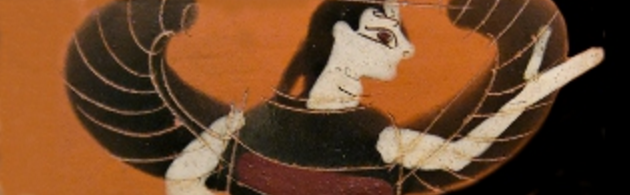
For a handful of earth. Conflict, grace, and dialogue: the dis-birth of Antigone as an ethical model of the duality between the not-yet and the no longer
Article Sidebar

Main Article Content
Abstract
Pain, suffering, and limitations impose themselves as events. This was the original meaning of pathos: something that happens.
When we are faced with our own frailty, the inevitability that we must suffer, and our ineludible struggle with limits, all language appears to fall apart, all forms of explanation appear to break down. Attemts to discuss pain in logical terms are doomed to failure.
Talking about pain or trying to soothe it makes words appear to be either inadequate or superfluous. The vanity of the logos seems to introduce a distance between us and our experience. Yet it is from words that we expect to draw relief, salvation. Because if pain can be expressed, then some form of support becomes possible. If there are words to tell the pain, then not only is its existence confirmed, but subjects can gain access to, or realize that they already possess, the resources for coping with their suffering. It can even happen that words of pain, through over-repetition or over-familiarity, lose their proximity to the agony that prompted them in the first place, to the experience they rested on or of which they were born.
The relationship between words and pain is crucial to a philosophy of education that sets out to engage with the connection between learning and suffering, between pathos and mathos.
Language teaches an “ethics of the finite nature of meaning” which enables us to construct and recostruct, time and again, a coherent landscape of otherwise irreconcilable experiences.
It is through language and the potential that it offers us to start afresch (which the philosopher Maria Zambrano defines as the experience of des-nacer, or being unborn) that we can experience words, dialogue, and relationality as a form of learning.
Heidegger suggests that language can become the abode of being, if we can grasp that it is through our struggles with words and unceasing “beginning again” through them that enables us to be in the world, and to dwell in its space of possibility and discursive openness.